

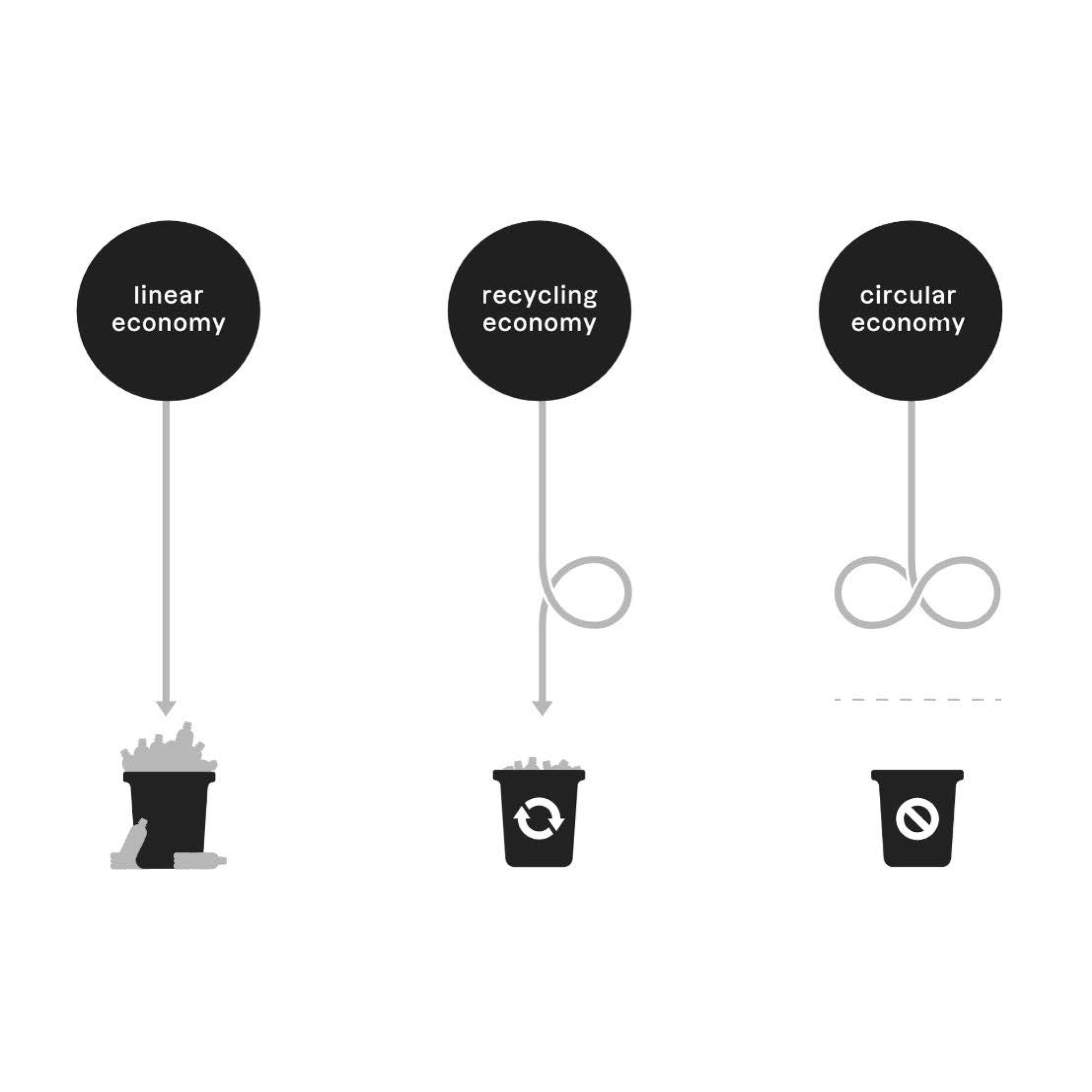
What is it and why do we need to act on it?
Circular fashion is a sustainable approach to fashion that takes into consideration the impact of the fashion industry on the planet. It aims to minimize waste, reduce the use of non-renewable resources, and prioritize the use of sustainable materials. By adopting circular fashion practices, the fashion industry can contribute to the preservation of the planet's resources and reduce its negative impact on the environment. Additionally, by encouraging consumers to adopt responsible consumption habits, circular fashion promotes a more sustainable and mindful lifestyle that benefits both people and the planet.

Why do we need to think circular?
Adopting circular economy practices can have a positive impact on the environment by reducing waste, pollution, and the use of non-renewable resources. This, in turn, can lead to cost savings for brands through the reduction of waste and the re-use of materials, as well as the creation of new revenue streams through the sale of recycled materials.
Moreover, adopting circular economy practices demonstrates a brand's commitment to social responsibility, ethical labor practices, and sustainable production, which can improve a brand's reputation and maintain customer loyalty.

What makes sunglasses an ideal product for circular economy?
By incorporating circular economy principles into the production and design of sunglasses, companies can extend the life cycle of their products, reduce waste, and contribute to a more sustainable future.
- DURABILITY
Sunglasses are typically made of durable materials such as plastic, metal, or wood, which can be easily recycled or reused. - REPAIRABLE
Sunglasses are often repairable, with replacement parts available for hinges, nose pads, and lenses, extending their lifespan and reducing waste. - VALUABLE MATERIALS
Sunglasses often contain valuable materials such as titanium, aluminium, or high-quality plastics, which can be extracted and reused in the production of new sunglasses. - LIMITED FASHION SEASONS
Unlike other fashion items, sunglasses are a timeless accessory that are worn year-round, making them less susceptible to changes in fashion trends and therefore less likely to be discarded quickly. - CONSUMER DEMAND
Consumers are becoming more aware of the environmental impact of fashion products, and are seeking out more sustainable and responsible products. Sunglasses that are made with circular economy principles can attract these environmentally conscious consumers.
Why we need to act now?
10%
of global carbon emissions are caused by textile production making it the second-largest industrial polluter after the oil industry.
(UN environment programme)
only 1%
of the material used to produce clothing is recycled into new garments, with the remaining 99% discarded or incinerated.
(Ellen MacArthur Foundation)
79%
The adoption of circular economy practices in the fashion industry can lead to a reduction in greenhouse gas emissions by 79% and a reduction in water usage by 91%.
(Circle Economy)
92M tons
of waste each year is produced by the global fashion industry, with 85% of textile waste ending up in landfills.
(Circular Fibres Initiative)
37 kg
of textiles are thrown away by an average American each year.
(Council for Textile Recycling)
$560 billion
Economic opportunity by 2030 of adopting circular economy practices.
(Ellen MacArthur Foundation)